


Is Orange Pekoe the Same as Black Tea?
When comparing orange pekoe vs black tea, the key difference is that orange pekoe is a leaf grade, while black tea is the broader tea category.
Black tea is the category.
Orange pekoe describes whole-leaf size within that category.
So yes, orange pekoe is black tea — but not all black tea is orange pekoe.
Orange Pekoe vs Black Tea: What Is Black Tea?
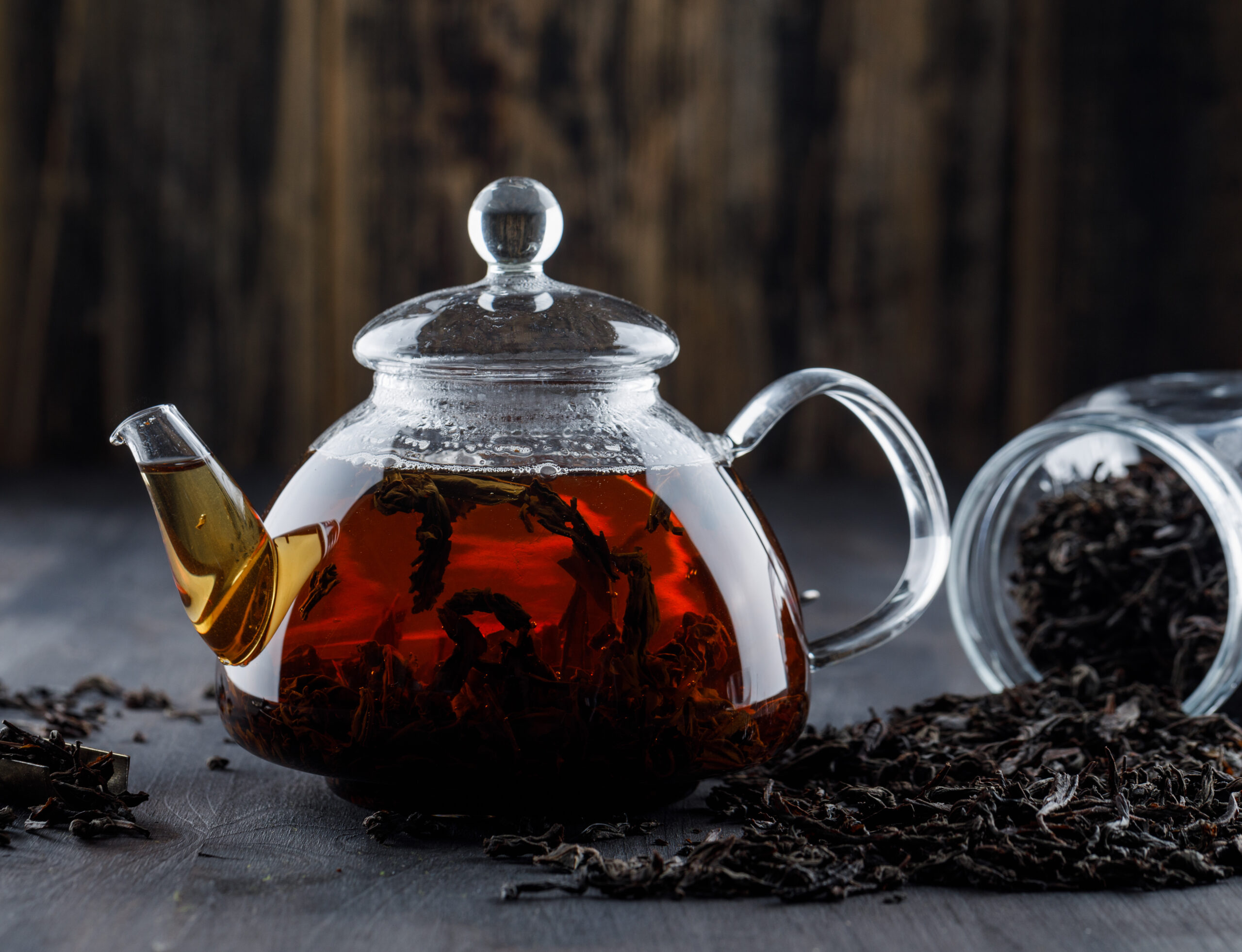
Black tea is one of the most popular types of tea in the world. Like green, white, and oolong tea, it comes from the leaves of the Camellia sinensis plant. What makes black tea distinctive is that the leaves are fully oxidized during processing.
Oxidation helps create black tea’s characteristic:
- Bold flavour
- Deep amber colour
- Rich aroma
- Moderate caffeine content
Popular regional examples include:
- Assam tea – malty, robust, and full-bodied
- Darjeeling tea – lighter, floral, and aromatic
- Ceylon tea – bright, brisk, and refreshing
Black tea may be sold as loose-leaf or in tea bags, and the experience in your cup can vary considerably depending on the leaf grade, origin, brewing temperature, and steeping time.
What Does Orange Pekoe Mean in Tea Grading?
Despite the name, Orange Pekoe has nothing to do with oranges or orange flavour. It is not an ingredient or a type of flavoured tea.
Orange Pekoe is a tea grading term traditionally used to describe certain whole-leaf black teas. The grading system generally refers to characteristics such as leaf size and appearance rather than the flavour or quality of the brewed tea.
The exact origin of the name “Orange Pekoe” is uncertain. One commonly repeated explanation connects the word “orange” to the Dutch House of Orange, while “pekoe” is generally thought to derive from a Chinese term associated with the fine, down-like hairs found on young tea leaves. Whatever its linguistic origin, Orange Pekoe today refers to tea grading — not orange flavour.
Orange Pekoe does not mean:
- Orange flavor
- Added fruit or peel
- A separate type of tea plant
It is simply one grade within the broader black tea classification system.
How Black Tea is Graded
Black tea is commonly graded according to characteristics such as the size, shape, wholeness, and appearance of the tea leaves after processing.
Tea grading does not measure taste — it describes how the leaves are sorted after harvesting and oxidation.
The main black tea grading system includes:
OP (Orange Pekoe): Whole, unbroken tea leaves
FOP (Flowery Orange Pekoe): Whole leaves with young tea buds
GFOP (Golden Flowery Orange Pekoe): Higher percentage of golden tips (buds)
TGFOP (Tippy Golden Flowery Orange Pekoe): Very high bud content and premium quality appearance
BOP (Broken Orange Pekoe): Broken leaves that brew faster and produce a stronger cup
| Grade | Meaning | Leaf Type |
|---|---|---|
| OP | Orange Pekoe | Whole leaf |
| FOP | Flowery Orange Pekoe | Whole leaf + buds |
| GFOP | Golden Flowery Orange Pekoe | Whole leaf + golden tips |
| TGFOP | Tippy Golden Flowery Orange Pekoe | Whole leaf + high tip content |
| BOP | Broken Orange Pekoe | Broken leaves |
Whole-leaf teas often produce a more nuanced cup, while smaller or broken leaves generally infuse more quickly and can produce a stronger brew.
Does Orange Pekoe Taste Different From Other Black Tea?
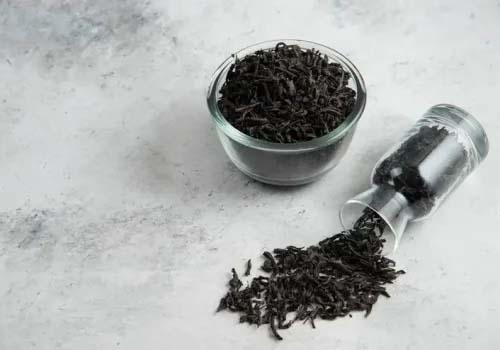
Orange pekoe does not have one specific flavour of its own because it is not a separate type of tea. Instead, Orange Pekoe is a leaf grade used within black tea, and its flavour depends largely on where the tea is grown and how it is produced.
The flavour of orange pekoe depends mainly on:
- The tea-growing region
- Climate and soil conditions
- Harvest time
- Processing methods
For example:
- Orange pekoe from Assam tea tends to taste bold, malty, and strong
- Orange pekoe from Darjeeling tea is often light, floral, and delicate
- Orange pekoe from Ceylon tea is typically bright, brisk, and slightly citrusy
Leaf grade mainly affects how quickly and strongly the tea infuses, rather than determining its core flavour profile.
- Whole leaves (such as OP) → smoother, more layered flavour
- Broken leaves → faster infusion and often a stronger cup
So while whole-leaf Orange Pekoe may produce a smoother, more nuanced cup than smaller or broken-leaf grades, its flavour still depends greatly on origin, growing conditions, processing, and brewing.
Is Orange Pekoe Stronger Than Other Black Tea?
Orange Pekoe is not inherently stronger than other black teas. The strength of the brewed cup depends more on leaf size, processing method, the amount of tea used, and how long it is steeped.
In general:
- Broken-leaf teas (such as BOP) infuse more quickly and can produce a stronger cup.
- Whole-leaf teas (such as OP) generally infuse more slowly and can produce a smoother, more nuanced cup.
However, Orange Pekoe can still produce a strong cup when more tea is used or the leaves are steeped longer.
Tea strength is influenced by:
- Leaf size (whole vs broken)
- Steeping time
- Water temperature
- Leaf-to-water ratio
So, Orange Pekoe is not inherently stronger or weaker than other black teas. The strength of the cup can be adjusted through the amount of tea used, water temperature, and steeping time.
Is Orange Pekoe Healthier?
Orange Pekoe is not a separate type of tea with unique health properties. Because Orange Pekoe is a leaf grade used for black tea, its nutritional compounds are broadly similar to those found in other black teas.
Because Orange Pekoe is a grade of black tea, it contains many of the same naturally occurring compounds found in other black teas, including polyphenols such as:
- Theaflavins
- Thearubigins
Theaflavins and thearubigins are polyphenols formed during black tea processing and contribute to the colour, flavour, and antioxidant activity of brewed black tea.
The composition and characteristics of brewed black tea can vary depending on factors such as:
- The quality and condition of the tea leaves
- Growing and harvesting conditions
- How the tea is processed and stored
In short, Orange Pekoe is not a separate “healthier” category of tea. It is a leaf grade used within black tea, and its naturally occurring compounds are similar to those found in other black teas.
Orange Pekoe vs Black Tea: Side-by-Side Comparison
| Feature | Black Tea | Orange Pekoe |
|---|---|---|
| What it is | A tea category | A leaf grade |
| Oxidation | Fully oxidized | Fully oxidized |
| Leaf size | Varies | Whole, unbroken leaf |
| Flavour | Depends on region | Depends on region |
| Strength | Depends on grade | Often smoother with whole-leaf grades |
The main takeaway: Orange Pekoe is a leaf grade used within black tea — not a separate type of tea.
How to Choose a High-Quality Black Tea
Choosing a high-quality black tea comes down to observing a few key indicators of freshness, leaf quality, and sourcing.
1. Consider the leaf grade
Whole-leaf grades such as Orange Pekoe (OP) and Flowery Orange Pekoe (FOP) often produce a smoother, more nuanced cup, while broken-leaf grades infuse more quickly and can produce a stronger brew. Leaf grade alone, however, does not determine the overall quality of a tea.
2. Check the aroma
Fresh black tea should have a clean, rich aroma. Stale or low-quality tea may smell flat, dusty, or overly bitter even before brewing.
3. Consider the origin
Tea-growing regions strongly influence flavour. Well-known origins include:
- Assam tea – bold and malty
- Darjeeling tea – light and floral
- Ceylon tea – bright and brisk
4. Choose organic when possible
Organic black tea is produced according to organic farming standards that restrict the use of many synthetic pesticides and fertilizers, which some tea drinkers prefer when choosing how their tea is grown.
5. Avoid excessive dust or fannings
Very fine tea particles are often used in lower-grade tea bags. These brew quickly but may lack complexity and depth of flavour.
Which One Should You Choose?
If you’re choosing a black tea and wondering whether an Orange Pekoe grade is right for you, here’s what to consider:
Look for an Orange Pekoe Grade if:
- You prefer whole-leaf tea
- You enjoy smooth, well-balanced brews
- You want a classic, balanced black tea experience
Consider Origin and Style if:
- You want bold, malty strength (like Assam tea)
- You prefer light and floral notes (like Darjeeling tea)
- You enjoy bright citrusy sharpness (like Ceylon tea)
- You love breakfast blends with milk
The real difference comes down to leaf grade, origin, processing, and how the tea is brewed — not simply the name on the label.
Loose Leaf vs Tea Bags: Why Grade Matters
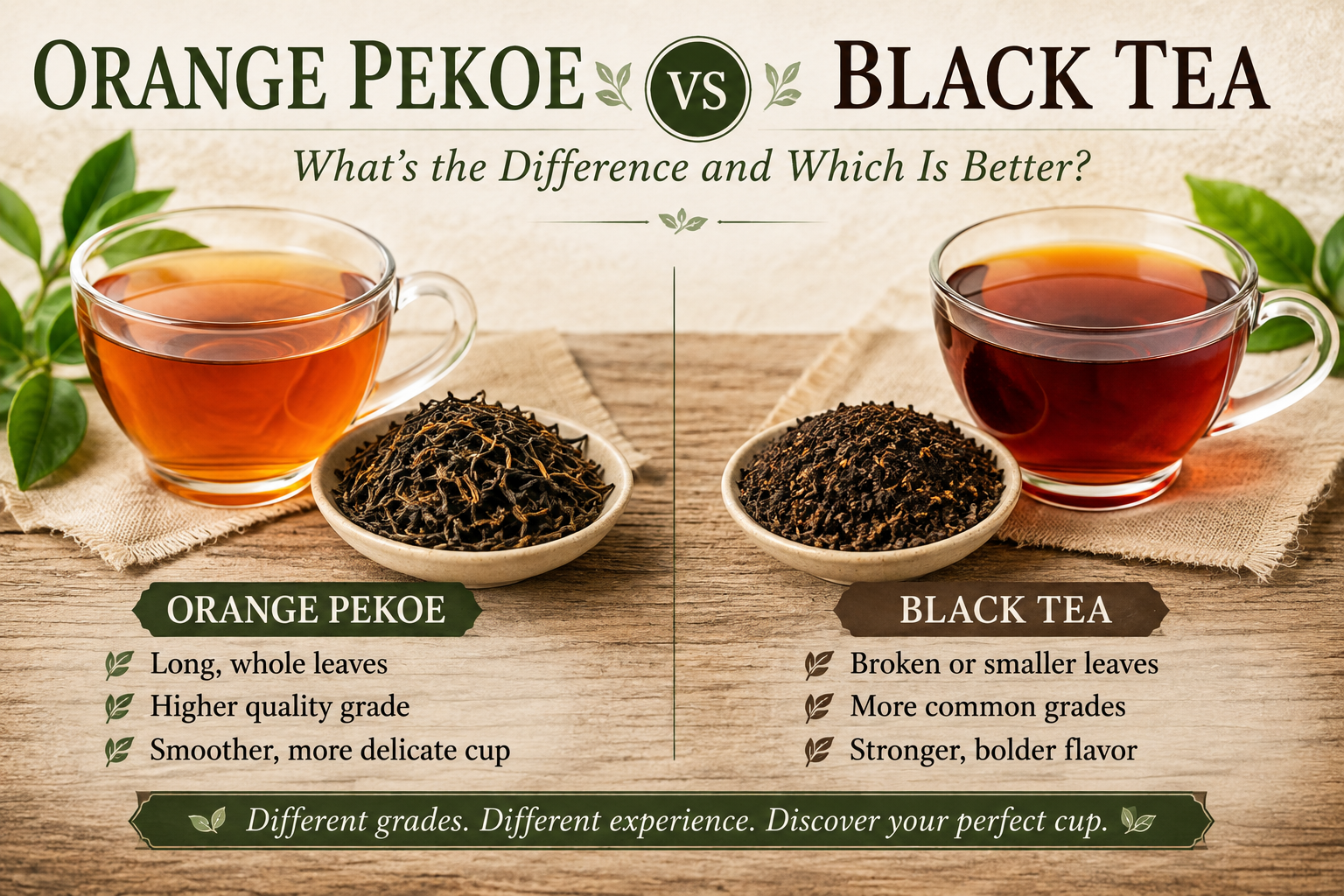
Black tea grade plays an important role in how tea is packaged and brewed, especially when comparing loose leaf tea to tea bags.
Many conventional tea bags use smaller broken-leaf grades, such as BOP (Broken Orange Pekoe), because they infuse quickly and efficiently:
- Brew quickly
- Produce a strong, dark colour
- Are more cost-efficient for mass production
However, broken leaves often release flavour quickly, which can sometimes lead to a more bitter or one-dimensional cup if over-steeped.
Loose-leaf orange pekoe and other whole leaf grades tend to:
- Steep more slowly and evenly
- Produce a smoother, more layered flavour
- Offer better aroma and complexity
Whole leaves generally infuse more gradually than smaller or broken leaves, which can help produce a smoother, more layered cup.
In general:
- Tea bags = convenience and strength
- Loose leaf = quality, balance, and flavour depth
If you enjoy a more refined tea experience, loose leaf whole-leaf grades like orange pekoe often provide a noticeably smoother cup.
Common Misconceptions About Orange Pekoe
There are several misunderstandings about orange pekoe tea, mostly due to its name and how tea labels are interpreted.
Myth 1: Orange Pekoe contains orange peel
This is false. Orange pekoe has no citrus flavour and does not contain orange peel or any added fruit ingredients. It is simply a grading term used for black tea leaves.
Myth 2: Orange Pekoe is a flavored tea
Orange pekoe is not a flavoured tea. The term is used within black tea grading systems to describe a leaf grade, rather than indicating any added flavouring.
Myth 3: Orange Pekoe is a lower-quality tea
Not necessarily. Orange Pekoe is a whole-leaf grade used in some black tea grading systems. The term describes the leaf grade rather than guaranteeing the overall quality of the tea, which also depends on factors such as origin, harvest, processing, freshness, and storage.
Myth 4: All black tea is orange pekoe
No. Black tea is the category, while orange pekoe is just one grade within that category. Many black teas fall outside the OP grading system entirely.
Myth 5: The darker the tea, the stronger it is
Tea colour does not always indicate strength. Darkness can come from oxidation or leaf grade, but strength depends more on steeping time, leaf size, and brewing method.
Brewing Tips for Orange Pekoe and Black Tea
Brewing black tea properly can make a noticeable difference in flavour, aroma, and overall balance — especially when working with different leaf grades like orange pekoe.
1. Use fresh, filtered water
Good water quality is essential. Filtered water helps preserve the natural flavour of the tea without adding unwanted tastes.
2. Heat water to the right temperature
For most black teas, including orange pekoe, use water that is just off boiling (around 95–100°C / 203–212°F).
3. Steep for the right amount of time
- Whole leaf teas (like orange pekoe): 3–5 minutes
- Broken leaf teas: 2–4 minutes
Steeping too long can cause bitterness, especially in broken leaf grades.
4. Adjust strength to taste
Tea strength depends on:
- Amount of tea used
- Steeping time
- Leaf size
If your tea is too strong, reduce steeping time. If it’s too light, increase the amount of tea leaves rather than steeping longer.
5. Experiment with whole-leaf tea
Orange pekoe and other whole-leaf black teas can often be steeped multiple times, with each infusion revealing slightly different flavour notes.
Final Thoughts
The orange pekoe vs black tea difference is simple once you understand how tea is classified.
Black tea is the category, while Orange Pekoe is a leaf grade used within some black tea grading systems.
In other words:
- Black tea = the tea category
- Orange pekoe = the leaf grade
Understanding this distinction helps you read tea labels with confidence, choose higher-quality tea, and better understand what you’re drinking.
Whether you prefer bold brews like Assam tea, light floral cups like Darjeeling tea, or bright, refreshing teas like Ceylon tea, knowing how tea is graded helps you make more informed choices.
After exploring orange pekoe vs black tea, take your tea knowledge further with our free Black Tea Grading Guide and learn how to identify quality tea with confidence.
Free Black Tea Grading Guide
Ready to choose better tea with confidence?
👉 Download our Free Black Tea Grading Guide
👉 Or explore our premium organic loose-leaf teas
About the Author

My name is Nancy Prokosh, founder of Tealicious Tea BouTEAque. I began my tea business in 2001 and have continued to deepen my knowledge of tea through continued education and years of hands-on experience.
I am a certified Tea Master with training in tea tasting and consulting, and a member of the Tea Association of Canada. I am passionate about helping others discover the fascinating world of tea — from flavour and quality to its history, traditions, and cultural significance.