


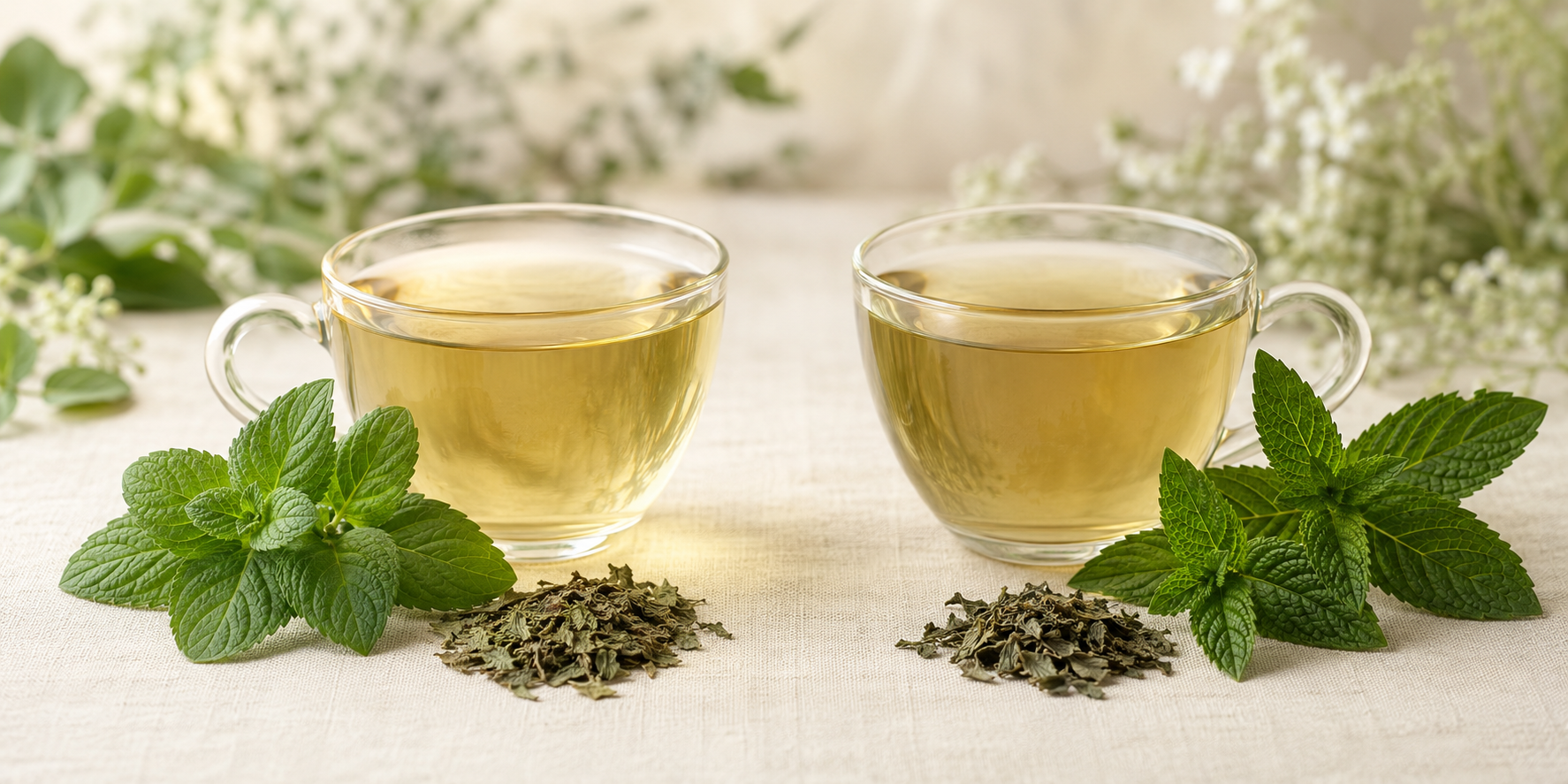
Spearmint and peppermint may look similar, smell refreshing, and belong to the same mint family—but they are not the same herb.
The most noticeable difference is flavour. Spearmint tastes gently sweet, fresh, and smooth, while peppermint has a stronger, cooler flavour that can create a distinctive tingling sensation in the mouth. That difference comes largely from the natural aromatic compounds found in each plant.
Both herbs can be steeped into refreshing, naturally caffeine-free herbal teas. However, their different flavours make them suitable for different moods, recipes, and tea blends.
If you have ever wondered whether spearmint or peppermint is the better choice for your cup, this guide will help you understand their origins, flavour profiles, traditional uses, and brewing methods.
Spearmint vs. Peppermint: The Quick Answer
Spearmint is a naturally occurring mint species known botanically as Mentha spicata. Its flavour is mild, sweet, and softly refreshing because its aroma is influenced primarily by a compound called carvone.
Peppermint loose-leaf, known botanically as Mentha × piperita, is a natural hybrid of spearmint and watermint. It generally contains more menthol, giving it a stronger cooling sensation and a more intense mint flavour.
In simple terms:
- Choose spearmint when you want a mild, sweet, easygoing cup.
- Choose peppermint when you want a bold, crisp, noticeably cooling cup.
Both are members of the Mentha genus, but their flavour, aroma, and intensity make them surprisingly different tea experiences.
Spearmint vs. Peppermint Comparison
| Characteristic | Spearmint | Peppermint |
|---|---|---|
| Botanical name | Mentha spicata | Mentha × piperita |
| Plant type | Mint species | Natural hybrid of spearmint and watermint |
| Primary aromatic influence | Carvone | Menthol and menthone |
| Flavour | Mild, sweet, smooth | Bold, cool, sharp |
| Cooling sensation | Gentle | Strong and noticeable |
| Aroma | Fresh, green, softly sweet | Intensely minty and invigorating |
| Caffeine | Naturally caffeine-free | Naturally caffeine-free |
| Best enjoyed | Alone or in gentle herbal blends | Alone or in bold, refreshing blends |
| Common culinary uses | Salads, sauces, savoury dishes and drinks | Tea, chocolate, candies and desserts |
| Ideal for | Those who prefer a softer mint | Those who enjoy a powerful mint flavour |
What Is Spearmint?

Spearmint is an aromatic perennial herb belonging to the mint family, Lamiaceae. Its botanical name, Mentha spicata, refers to the pointed or spear-like shape of its leaves.
It has been used for generations in cooking, beverages, herbal traditions, and personal-care products. When a recipe simply calls for “mint,” spearmint is often the variety being referenced because its gentle flavour works well without overwhelming the other ingredients.
Spearmint is commonly used in:
- Herbal tea and tea blends
- Cold drinks and mocktails
- Fruit salads
- Yogurt-based sauces
- Mediterranean and Middle Eastern dishes
- Jellies and condiments
- Toothpaste, gum, and oral-care products
Its fresh flavour is recognizable, but it is noticeably softer than peppermint.
What Does Spearmint Tea Taste Like?
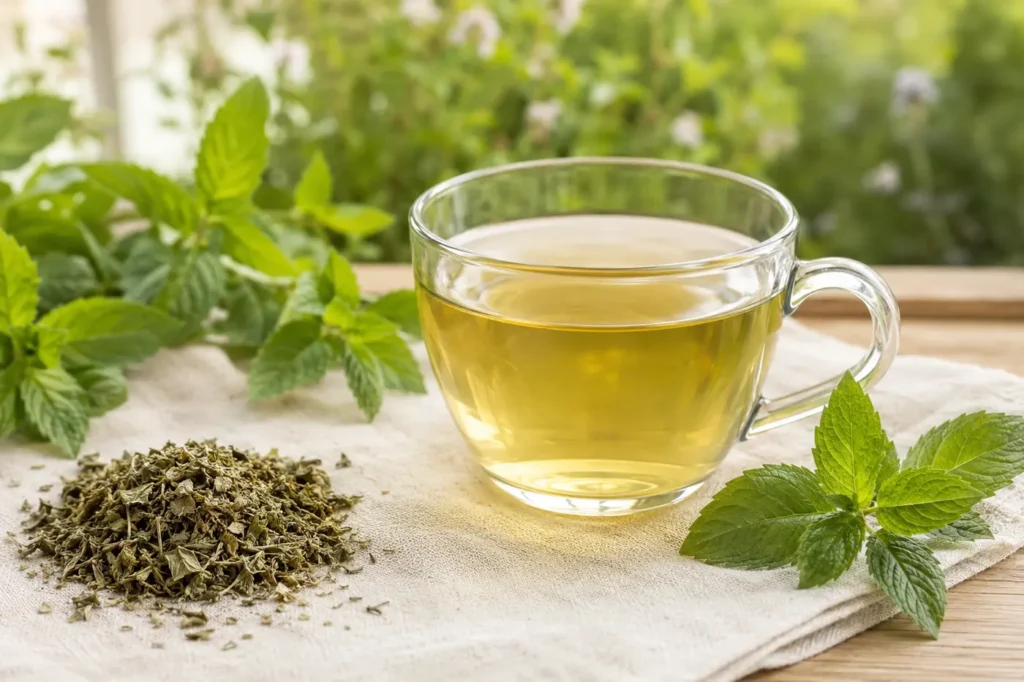
Spearmint tea has a smooth, mildly sweet taste with a fresh green aroma. It does not usually produce the powerful icy sensation associated with peppermint.
Some people find that spearmint has a softer, almost garden-fresh character. Its natural sweetness makes it enjoyable without sugar or honey, although a little honey can create an especially soothing cup.
Because it is relatively gentle, spearmint combines beautifully with ingredients such as:
- Lemon
- Lemongrass
- Green tea
- Chamomile
- Hibiscus
- Lavender
- Rose petals
- Ginger
- Berries
- Cucumber
Spearmint is a lovely choice for tea drinkers who want something refreshing but find peppermint too strong.
What Is Peppermint?
Peppermint is a natural hybrid created from watermint and spearmint. Its botanical name is written as Mentha × piperita, with the multiplication symbol indicating its hybrid origin.
Although spearmint is one of peppermint’s parent plants, peppermint has developed its own distinctive flavour and botanical characteristics.
Peppermint is widely used in:
- Loose-leaf herbal tea
- Herbal tea blends
- Chocolate and desserts
- Candy canes and other sweets
- Toothpaste and mouthwash
- Culinary extracts
- Aromatic personal-care products
It has become one of the most recognizable members of the mint family because of its crisp aroma and cooling intensity.
What Does Peppermint Tea Taste Like?
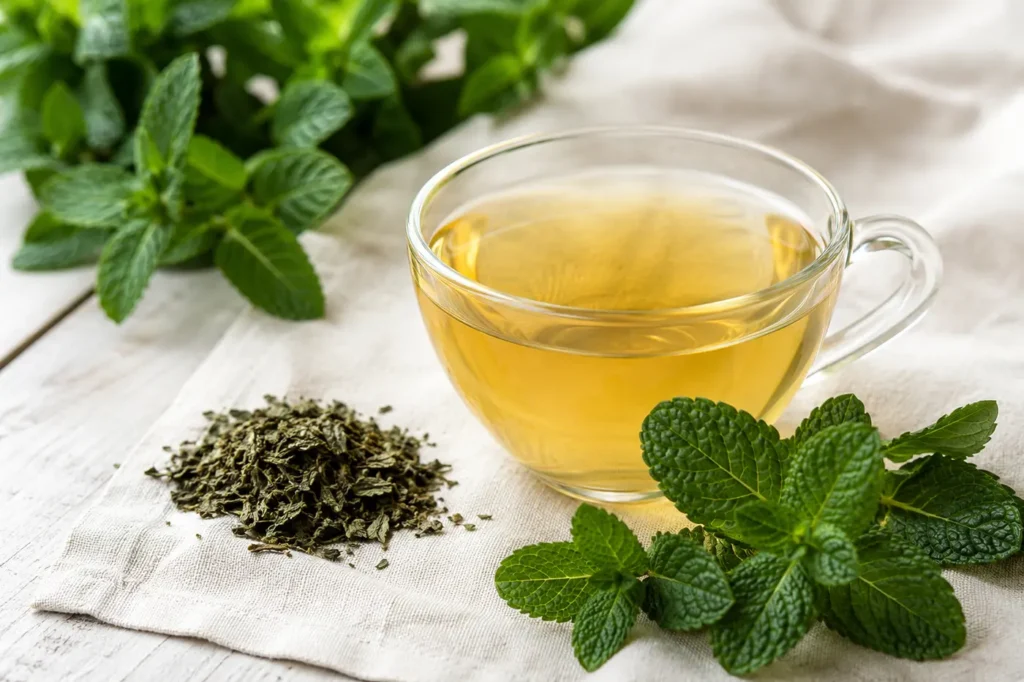
Peppermint tea tastes bold, fresh, clean, and noticeably cooling. Its natural menthol creates a sensation that can feel almost icy, even when the tea is served hot.
The flavour generally begins with a strong burst of mint, followed by a clean and refreshing finish. High-quality peppermint leaves can also have a subtle natural sweetness beneath their cooling character.
Peppermint pairs especially well with:
- Chocolate
- Ginger
- Licorice root
- Lemongrass
- Fennel
- Rooibos
- Green tea
- Black tea
- Lemon peel
- Chamomile
It can be enjoyed throughout the year. A warm cup feels comforting during cooler weather, while iced peppermint tea is wonderfully refreshing on a hot summer day.
The Main Flavour Difference: Menthol vs. Carvone
The most important difference between spearmint and peppermint comes from their aromatic chemistry.
Spearmint’s characteristic aroma is influenced primarily by carvone. This natural compound provides the softly sweet, familiar flavour associated with spearmint gum, garden mint, and many savoury dishes.
Peppermint is more closely associated with menthol and menthone. Menthol activates cold-sensitive receptors in the mouth and creates a cooling sensation—even though it does not actually lower the temperature of your mouth.
This explains why peppermint tastes much cooler and more intense than spearmint.
Scientific reviews of Mentha plants consistently identify carvone as a characteristic compound in spearmint and menthol and menthone as important components of peppermint. However, the exact composition of a plant can vary according to growing conditions, climate, harvest time, and processing methods. Research published in Molecules provides a detailed comparison of these characteristics.
Is Peppermint Stronger Than Spearmint?
Yes. Peppermint generally tastes stronger than spearmint.
Its menthol-rich character gives peppermint a sharper aroma, greater intensity, and more noticeable cooling finish. Spearmint is milder, sweeter, and less likely to dominate a recipe or herbal blend.
This does not mean that one is better than the other. The right choice depends on the experience you want.
Choose peppermint if you enjoy:
- A bold mint flavour
- A strong cooling sensation
- A clean, invigorating finish
- An intense after-dinner herbal tea
- Refreshing hot or iced tea
Choose spearmint if you enjoy:
- A gentle mint flavour
- Natural sweetness
- A softer herbal infusion
- Delicate blends with flowers or fruit
- Mint that complements rather than dominates
Are Spearmint and Peppermint Real Tea?
Spearmint and peppermint are commonly called tea, but they are technically herbal infusions or tisanes.
Traditional tea comes from the leaves of the Camellia sinensis plant. Black, green, white, and oolong tea all come from this one plant, although they are processed differently.
Spearmint and peppermint come from plants in the Mentha genus. When their leaves are steeped in hot water, they create an herbal infusion rather than a traditional tea.
In everyday conversation, however, “spearmint tea” and “peppermint tea” are perfectly acceptable and widely understood terms.
Do Spearmint and Peppermint Contain Caffeine?
Pure spearmint and pure peppermint leaves are naturally caffeine-free.
This makes both suitable for people who want to reduce caffeine or enjoy a warm cup later in the day. They can be refreshing in the morning, comforting after a meal, or incorporated into a calming evening tea ritual.
Always check the ingredient list when purchasing a blend. Mint itself does not contain caffeine, but a mint blend may also contain black tea, green tea, yerba mate, or another caffeinated ingredient.
Peppermint Tea and Digestion: What Does the Evidence Say?
Peppermint has a long history of traditional use after meals and for minor digestive discomfort.
The European Medicines Agency recognizes the traditional use of peppermint leaf preparations for digestion-related concerns such as indigestion and flatulence. However, it also explains that this conclusion is based largely on long-standing use rather than strong clinical trials of peppermint tea itself. Read the EMA’s peppermint-leaf assessment.
You may also hear that peppermint has been proven to help irritable bowel syndrome. This claim requires an important distinction.
Much of the stronger clinical research concerns specially prepared, enteric-coated peppermint oil capsules—not an ordinary cup of peppermint tea. Peppermint essential oil, peppermint capsules, and peppermint-leaf tea are very different preparations and should not be treated as interchangeable.
Peppermint tea can still be enjoyed as part of a soothing after-meal ritual, but it should not be presented as a treatment or cure for a medical condition.
What About the Potential Benefits of Spearmint Tea?
Spearmint also has a long history of culinary and traditional herbal use. Early studies have explored its antioxidant properties and its possible effects on hormones, digestion, and other aspects of health.
For example, a small study involving women with excess facial or body hair examined spearmint tea and certain hormone measurements. Although the results attracted attention, the study was short and included a limited number of participants. Its authors noted that longer research would be needed to assess meaningful clinical results. View the study on PubMed.
This is a good example of why health headlines should be read carefully. One small study does not prove that spearmint tea treats a hormonal condition.
Spearmint tea is best described as a naturally caffeine-free herbal beverage with a gentle, refreshing flavour—not as a medical treatment.
Can Peppermint Tea Cause Heartburn?
Peppermint may worsen heartburn or acid reflux in some people.
The European Medicines Agency advises that peppermint-leaf preparations can aggravate gastroesophageal reflux and that people with gallstones or other bile-related concerns should exercise caution.
If you regularly experience acid reflux, peppermint may not be the ideal herbal tea for you. Spearmint is milder in flavour, but anyone managing a medical condition or taking medication should still speak with a qualified healthcare professional about suitable herbal products.
It is also important to remember that peppermint tea is not the same as peppermint essential oil. Essential oils are extremely concentrated and should never be added to tea unless a qualified professional has specifically confirmed that the product and dose are appropriate for internal use.
Which Mint Is Better After a Meal?
Peppermint is the traditional favourite after a rich or heavy meal because its strong aroma and cooling finish can make the cup feel clean and refreshing.
Spearmint can also make a lovely after-dinner tea, particularly for people who prefer a sweeter, softer flavour.
The best choice is ultimately personal:
- Peppermint provides a bold, cooling finish.
- Spearmint provides a mild, gently refreshing finish.
Neither needs to be sweetened, making them simple choices when you want a flavourful herbal drink without adding sugar.
Is Spearmint or Peppermint Better Before Bed?
Both spearmint and peppermint are naturally caffeine-free, so either can be included in an evening routine.
However, being caffeine-free does not automatically mean that an herb causes sleep. Neither mint should be marketed as a proven sleep remedy.
Instead, the benefit may come from the ritual itself: boiling the water, measuring the leaves, allowing the tea to steep, and pausing to enjoy the aroma. These small actions can help create a gentle transition between a busy day and a quieter evening.
For a softer bedtime cup, spearmint may be appealing because of its mild sweetness. Peppermint may suit those who find its crisp aroma refreshing and comforting.
People prone to nighttime heartburn may wish to avoid peppermint or consult a healthcare professional before making it part of their evening routine.
How to Brew Spearmint Tea
Spearmint produces a smooth, aromatic infusion and is relatively forgiving to brew.
For one cup:
- Measure approximately one to two teaspoons of dried spearmint leaves.
- Heat fresh water to approximately 200°F or 93°C.
- Pour the water over the leaves.
- Cover the cup or teapot to help preserve the aromatic compounds.
- Steep for five to seven minutes.
- Strain and enjoy.
For a stronger infusion, add more leaves rather than steeping excessively long. This helps preserve a fresh, balanced flavour.
Spearmint can be enjoyed plain or with a small amount of honey or lemon.
How to Brew Peppermint Tea
Peppermint’s bold flavour makes it easy to adjust according to personal preference.
For one cup:
- Use approximately one to two teaspoons of dried peppermint leaves.
- Heat fresh water to approximately 200°F or 93°C.
- Pour the water over the leaves.
- Cover the cup or teapot.
- Steep for five to seven minutes.
- Strain and enjoy the fresh aroma.
Covering the tea while it steeps helps keep more of its fragrant natural oils in the cup.
If you prefer a strong, invigorating infusion, use two teaspoons and steep for seven minutes. For a gentler cup, begin with one teaspoon and steep for about five minutes.
How to Make Iced Mint Tea

Both spearmint and peppermint make excellent iced tea.
To prepare a simple pitcher:
- Add four to six teaspoons of dried mint leaves to a heat-safe pitcher or teapot.
- Pour four cups of freshly heated water over the leaves.
- Cover and steep for seven to ten minutes.
- Strain the leaves.
- Allow the infusion to cool.
- Refrigerate until chilled.
- Serve over ice.
Add lemon slices, cucumber, fresh berries, or a small amount of honey if desired.
Peppermint creates a bold and cooling iced tea, while spearmint produces a softer drink that pairs especially well with cucumber and fruit.
Can You Mix Spearmint and Peppermint?
Absolutely. Combining spearmint and peppermint creates a balanced mint infusion.
Spearmint contributes sweetness and softness, while peppermint provides cooling intensity. A blend can be especially useful for people who find plain peppermint too strong but want more freshness than spearmint provides on its own.
Begin with equal amounts of each herb. After tasting the infusion, adjust the ratio:
- Add more spearmint for a sweeter, gentler cup.
- Add more peppermint for a stronger, cooler cup.
The two mints also blend well with lemongrass, ginger, chamomile, green rooibos, lemon peel, or green tea.
Fresh Mint vs. Dried Mint Leaves
Both fresh and dried mint can be used to make tea, but they produce slightly different experiences.
Fresh mint tends to taste light, green, and delicate. Dried mint usually creates a more concentrated infusion because much of the plant’s water has been removed.
You will generally need a larger quantity of fresh leaves than dried leaves. For one cup, try a generous handful of gently crushed fresh leaves or one to two teaspoons of dried mint.
Dried loose leaves are also convenient because they:
- Are available throughout the year
- Store easily
- Require no washing or chopping
- Create consistent flavour
- Allow the leaves room to expand during steeping
- Make it easy to adjust the strength of each cup
Store dried mint in a sealed container away from heat, moisture, sunlight, and strong odours.
How to Choose Between Spearmint and Peppermint
Still not sure which one belongs in your teacup? Consider the flavour experience you want.
Choose spearmint when:
- You want a softly sweet herbal tea.
- You prefer a mild mint flavour.
- You are creating a delicate fruit or floral blend.
- You want mint for culinary recipes.
- Peppermint feels too strong.
Choose peppermint when:
- You want a bold, cooling cup.
- You enjoy a strong mint aroma.
- You want a refreshing after-dinner infusion.
- You are making iced tea for warm weather.
- You enjoy mint with chocolate, ginger, or licorice root.
The best way to understand the difference is to taste them side by side. Brew each herb using the same water temperature and steeping time. Notice the aroma first, then compare the sweetness, intensity, cooling sensation, and finish.
This simple tasting exercise turns an ordinary cup into a small tea-education experience.
Frequently Asked Questions
Are peppermint and spearmint the same plant?
No. Spearmint is the species Mentha spicata. Peppermint, or Mentha × piperita, is a natural hybrid of spearmint and watermint.
Which is sweeter: spearmint or peppermint?
Spearmint generally tastes sweeter and milder. Peppermint has a stronger, sharper, and more cooling flavour.
Which contains more menthol?
Peppermint is known for its menthol-rich aroma and cooling sensation. Spearmint’s characteristic flavour is influenced primarily by carvone and normally feels much less cooling.
Does peppermint tea contain caffeine?
Pure peppermint-leaf tea is naturally caffeine-free. Always read the ingredients in a blend because other types of tea may add caffeine.
Does spearmint tea contain caffeine?
Pure spearmint tea is also naturally caffeine-free.
Can I drink mint tea every day?
Many adults enjoy mint tea regularly as a beverage. Individual sensitivities, health conditions, pregnancy, and medications can affect whether an herb is suitable for someone. Consult a qualified healthcare professional when in doubt.
Is peppermint tea the same as peppermint oil?
No. Peppermint tea is made by steeping leaves in water. Peppermint essential oil is a highly concentrated product. Evidence about peppermint-oil capsules should not automatically be applied to peppermint tea.
Can mint tea cure digestive problems?
Mint tea should not be described as a cure. Peppermint leaf has a history of traditional use for minor digestive complaints, but clinical evidence for the tea remains limited. Persistent or serious symptoms require medical attention.
Which mint is best for iced tea?
Both work beautifully. Choose peppermint for a bold, cooling iced tea or spearmint for a mild, naturally sweet version.
Spearmint or Peppermint: Which One Wins?
There is no single winner in the spearmint-versus-peppermint comparison. Each herb offers a different experience.
Spearmint is sweet, gentle, and versatile. It complements fruit, flowers, savoury foods, and delicate herbal blends without overwhelming them.
Peppermint is bold, crisp, and intensely refreshing. Its cooling flavour makes it a memorable after-meal tea and a wonderfully invigorating iced infusion.
Whichever mint you choose, take time to appreciate the leaves, aroma, and changing flavour as the tea steeps. That simple pause is part of what makes loose-leaf tea so special.
Explore Tealicious Tea BouTEAque’s thoughtfully selected herbal teas and discover the mint that belongs in your daily tea ritual.
🍃 Tea is steeped—not rushed.